
Walking into a damp, musty lower level is a common headache for many Americans. You need a reliable solution to manage excess moisture and protect your stored belongings from ruin.
Surprisingly, many popular models are manufactured in the same few factories. Well-known brands like GE, Frigidaire, and Honeywell often sell the same machines with different labels.
In recent years, fire hazards led to massive recalls for New Widetech and Gree. We put 13 models through real-world testing to see which dehumidifier actually delivers performance instead of just brand hype.
Proper humidity control is vital for a healthy home and better air quality. Selecting an efficient dehumidifier ensures your lower level stays dry without the hassle of constant maintenance.
Our expert advice helps you keep your basement comfortable and safe for your family. Avoid common traps and invest in a unit that really stands up to the task.
Understanding Basement Moisture and Why It Matters
Have you ever wondered why your basement always feels a bit damp and smells musty? Since these areas sit underground with concrete walls, they naturally trap moisture and suffer from poor ventilation. This enclosed space creates a perfect breeding ground for mold and mildew to grow quickly.
Excess humidity doesn’t just stay in the lower part of your home. It often rises through the floors, which can increase energy costs and damage your favorite furniture. When humidity levels stay above 60%, mold spores thrive and can cause health issues for your family. High humidity also makes your cooling system work harder during the summer.
| Humidity Range | Environment Quality | Potential Risks |
|---|---|---|
| 30% – 50% | Healthy & Dry | Safe for storage |
| 50% – 60% | Slightly Damp | Musty odors begin |
| Above 60% | Very Humid | Mold and wood rot |
Understanding the right level of dryness is essential for your home’s safety. You should aim to keep the basement between 30% and 50% to protect your foundation and prevent wood rot. A quality dehumidifier helps by pulling excess water from the air to create a fresh environment.
Proper moisture control offers several key benefits:
- Protects wood beams from rot and prevents foundation issues.
- Eliminates musty odors that settle into your stored belongings.
- Lowers energy bills by making the air easier to cool.
Manufacturers design a dehumidifier to manage dampness, not to dry out actual puddles or soaked carpets. If you face serious flooding, you must fix the water source before using the machine. Seasonal changes often bring more moisture, so staying proactive is the best way to keep your house safe and healthy.
How We Tested Basement Dehumidifiers
We didn’t just read the boxes; we personally tested 13 different dehumidifiers in a controlled environment to find the real winners. Our team purchased these units with our own funds to ensure our recommendations stay completely honest and unbiased. We used a Levoit Classic 300S humidifier to raise the humidity to 94% inside a professional grow tent.
This created a tough environment to see how quickly each device could pull water from the air. Each dehumidifier ran at top speed for 30 minutes while we tracked progress with a SensorPush wireless hygrometer. We tested every device at least three times to make sure the data was consistent and reliable.
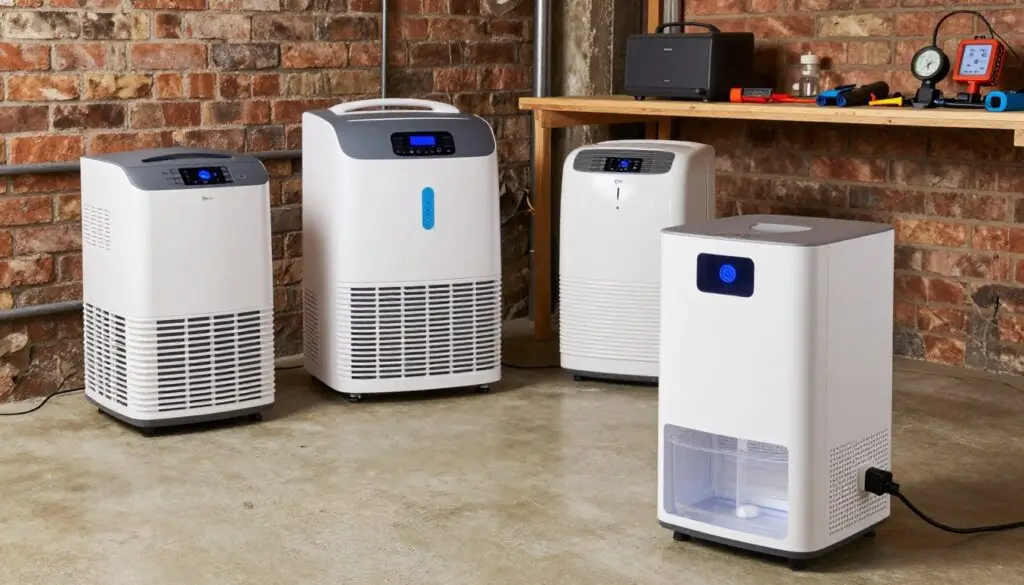
Our rigorous testing also moved into an unfinished basement for several days. There, we faced real-world temperatures ranging from 50 to 75°F to simulate a true basement setting. We also paid close attention to noise levels by using a BAFX Sound Level Meter from three feet away.
Efficiency matters too, so we measured power consumption with Poniie and MECHEER meters. This long-term testing helped us find hidden flaws in various models. For example, we discovered pump failures in certain hOmeLabs and Moiswell devices after only two months of daily use.
| Test Category | Equipment Used | Primary Goal |
|---|---|---|
| Performance testing | SensorPush Hygrometer | Measure humidity reduction |
| Noise Levels | BAFX Sound Meter | Evaluate dehumidifier volume |
| Energy Usage | Poniie PN2500 Meter | Track dehumidifiers efficiency |
Best Dehumidifier for Basements: Midea Cube 35-Pint
A high-quality studio photograph of the Midea Cube 35-Pint Dehumidifier in its expanded operating mode. The unit features a sleek white and black stackable design sitting atop its large transparent blue water tank. It is placed on a clean grey basement floor with soft lighting highlighting the digital control panel on top.
If you are tired of emptying a tiny water tank every few hours, the Midea Cube 35-Pint offers a massive solution. This unique dehumidifier uses a stackable design that saves space when stored but expands to hold a huge amount of liquid. It is our top choice for any basement that needs serious moisture control without the constant maintenance hassle.
Overview
The Midea Cube is not like any other device you have seen before. It features a nested design where the unit sits inside the bucket for easy storage. When you are ready to use it, simply lift the top section to reveal a high capacity reservoir.
During our performance testing, it dropped the humidity level in a damp room from 95% to 41% in just 30 minutes. This model pulls 35 pints of moisture daily and covers up to 800 square feet comfortably. It is a top performer for homeowners who want fast results in a large basement space.
Pros
The most impressive feature is the 6.25-gallon bucket, which holds more than double the amount of standard units. This means you will empty the water far less often, making it a “set and forget” choice. We also appreciated the very low noise output of 54.1 decibels during operation.
Because of the unique shape, you can place the fan unit higher than the floor for easy drainage. This allows you to use a gravity hose effectively without needing a separate pump. Relying on a gravity hose is often better since internal pumps are known to fail over time.
Cons
While this dehumidifier performs well, the side filters need regular vacuuming to keep the airflow strong. At 45.2 pounds, the unit is quite heavy once the tank is full. We suggest skipping the WiFi and pump versions as they add cost without much extra benefit.
Key Features and Specifications
This Energy Star rated unit is highly efficient, consuming only 378.83 watts at its highest speed. It provides a massive 50-pint storage capacity even though it removes 35 pints of moisture daily. The digital screen on top shows your current humidity level and allows for precise control of all settings.
- Dimensions: 14.8 x 14.4 x 14.5 inches.
- Refrigerant: Uses R-410A for cooling.
- Airflow: Reaches 185 cfm for better circulation.
- Warranty: Comes with a 1-year manufacturer warranty.
Best Traditional Design: Frigidaire FHDD5034Y1 50-Pint
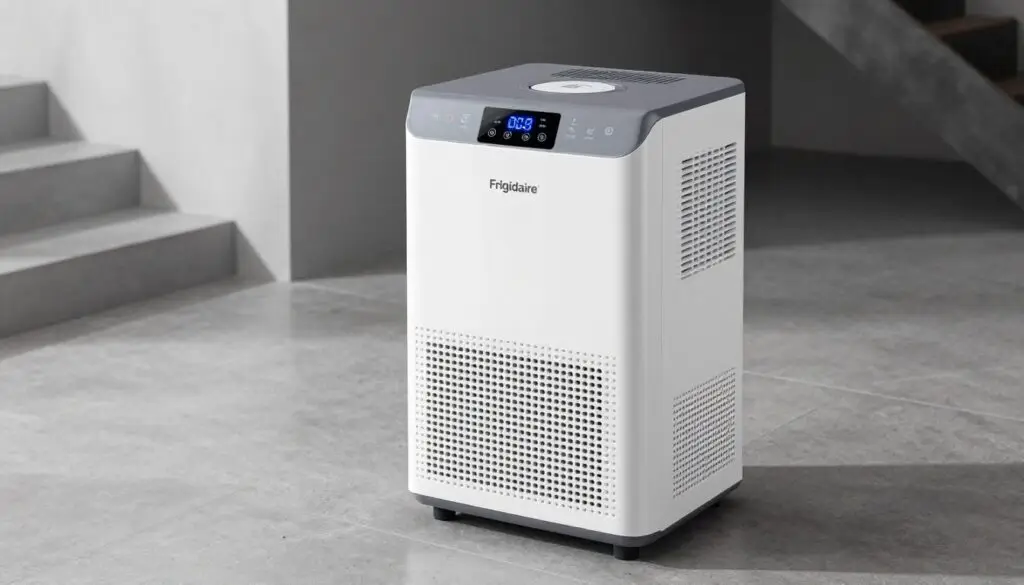
When Honeywell stopped making their large-capacity line, this Frigidaire model stepped up as the top traditional choice. It offers a classic look that fits perfectly in any finished or unfinished basement. This machine focuses on high performance without the need for flashy or unnecessary gadgets.
Overview
Our testing proved that this dehumidifier is a true powerhouse for moisture removal. It was the third quickest unit in our tests at lowering humidity levels rapidly. It managed to extract 1.137 liters of water in just a three-hour period.
In our most demanding test, it dropped the room moisture from 97.7% to 35.5% in 30 minutes. This 62.2% drop makes it one of the fastest performers we have ever analyzed. You can trust it to handle even the dampest underground conditions with ease.
Pros
The 50 pints daily capacity allows it to cover large areas up to 1,200 square feet. We were very impressed that the noise level stayed relatively low during operation. It runs nearly 6 decibels quieter than its closest Honeywell competitor.
The 16.9-pint tank is larger than average, which means you will spend less time carrying it to the sink. Moving the 41-pound machine is simple thanks to the sturdy pull-out handle and smooth caster wheels. It also features three fan speeds and a clear digital display for easy adjustments.
Cons
While the drying power is excellent, this unit does draw a significant amount of power at 655.29 watts. You may see a slight increase in your monthly utility bill if you run it on the highest setting. We also found that the mobile app connectivity was not very reliable during our setup process.
Key Features and Specifications
The latest model has been updated to be more efficient than previous versions. It now features an improved energy factor of 2.01 L/kWh. This helps balance out the high power draw by removing more moisture per watt used.
- Capacity: 49.71 pints (28.18 liters) per day.
- Tank Size: 16.9-pint (2.11 gallon) tank with splash guard.
- Coverage: Effective for spaces between 800 and 1,200 square feet.
- Dimensions: 15.8 x 12.4 x 25.4 inches; Weight: 41 lbs.
- Operating Modes: Auto, Quiet, and Dry settings with real-time humidity display.
- Warranty: Includes a 1-year limited warranty for peace of mind.
Best Smart Dehumidifier: Honeywell 25-Pint Energy Star With Pump
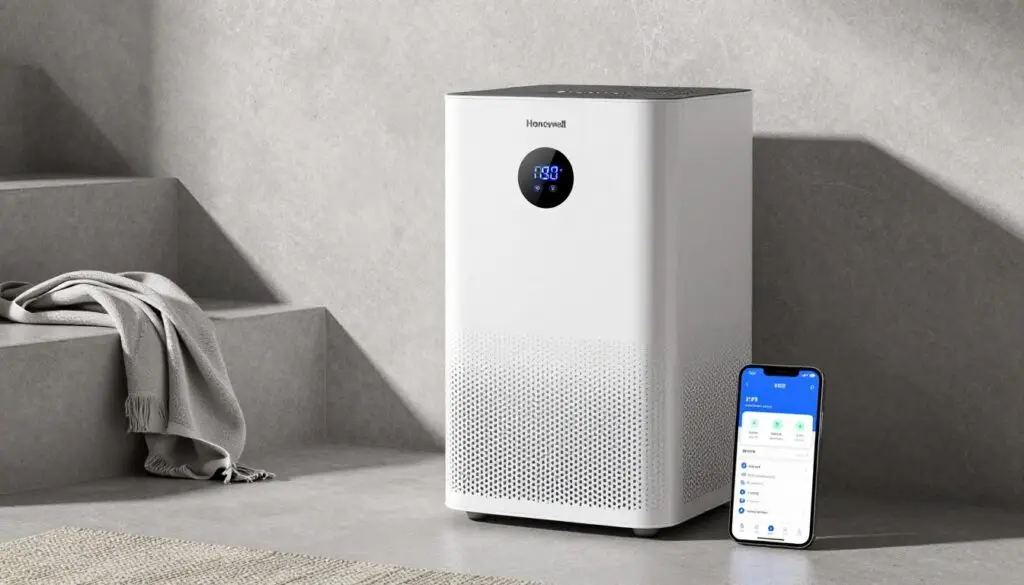
Managing your basement moisture becomes effortless with the Honeywell 25-Pint Energy Star unit and its advanced smart features. This device provides a high-tech way to keep your home dry without constant manual checks. It is the perfect choice for tech-savvy homeowners who want a “set-and-forget” solution for dampness.
Overview
This Honeywell model sits at the cutting edge of home comfort technology. It blends WiFi connectivity with a top efficiency rating for total basement control. You can monitor the air quality and change settings right from your phone using a dedicated app.
The unit includes a built-in pump, which gives you great freedom for placement. It can push water vertically up to a sink or out a high window. You do not need a floor drain nearby to keep this machine running smoothly all day long.
During independent testing, this unit showed remarkable power for its size. It reached the target moisture goals in about 18 hours, even in spaces larger than its rated capacity. It maintains a stable environment through specialized modes like “auto comfort” and “laundry.”
Pros
The mobile app is a huge time-saver for any busy homeowner. It stops you from walking downstairs just to check the water tank or adjust the fan speed. You can even use voice commands with Amazon Alexa or Google Home for hands-free operation.
This dehumidifier earned the Energy Star “Most Efficient” tag for its low power usage. It saves money on utility bills while removing a lot of moisture from the environment. The reliable pump system ensures the machine keeps working without you needing to empty buckets.
In various tests, it lowered the humidity level in a 2,000 square feet space very quickly. It stayed consistent over several days of operation. Energy efficiency and smart monitoring make this a top-tier investment for home health.
Cons
The premium price reflects its advanced features and smart technology. While it covers medium rooms effectively, very large open areas might need a higher-capacity unit. It is a specialized tool for those who value convenience over the lowest possible price point.
The water collection bucket is somewhat small because the design prioritizes the internal pump. If you do not use the continuous pumping feature, you may find yourself emptying the bucket frequently. However, most users prefer the automated drainage options anyway.
Key Features and Specifications
The machine runs with very low noise, making it perfect for finished basement gyms or home theaters. It features a 24-hour timer and an auto-defrost mode for chilly winter months. This feature prevents ice from building up on the coils when temperatures drop.
You can use the included hose for a continuous drain setup to simplify your maintenance routine. This dehumidifier measures roughly 20 inches tall and 12 inches wide, making it compact enough for tight corners. The integrated pump allows for versatile water removal in almost any room layout.
Best for Large Basements: Ivation 50-Pint With Pump
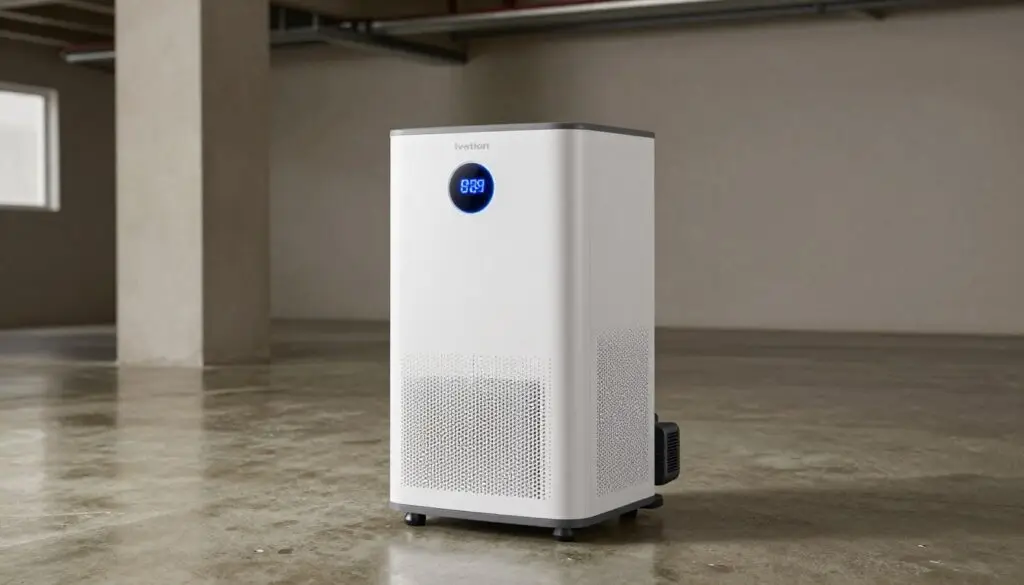
Managing moisture in sprawling 4,500 square foot areas requires a high-performance machine. This dehumidifier handles the most challenging underground environments with total ease. It offers a reliable way to keep your home dry and safe from potential dampness issues.
Large open areas often trap humid air in corners that smaller machines simply cannot reach. This model provides the airflow and power needed to circulate air across massive floor plans. It is a robust solution for those who need professional-grade results in a residential setting.
Overview
This powerful unit is a total game-changer for homeowners with massive storage or living spaces. It features a massive daily capacity of 50 pints, ensuring even the wettest areas stay comfortable. You can easily set your desired humidity levels with its user-friendly LCD interface.
The built-in 16-watt pump is the most impressive feature of this machine. It allows you to move water up to 16.4 vertical feet using the included 16-foot hose. This makes it the perfect dehumidifier for a basement that lacks a traditional floor drain.
Pros
Our testing showed this model has the longest operational time before needing manual attention. The 2.25-gallon tank provided over 8.5 hours of continuous use in very damp conditions. This was the best runtime among all the heavy-duty models we evaluated.
It also features an intelligent frost sensor to protect the internal components. This sensor detects ice on the coils and shuts the system down to let it melt. Once the coils are clear, it restarts automatically to continue protecting your property.
The auto-restart functionality is a lifesaver during summer storms and power outages. It remembers your previous settings and turns back on the moment power returns. This ensures your home stays protected even when you are away on vacation.
Cons
The high capacity means the physical size is larger than entry-level or portable models. It may feel a bit bulky if you are trying to hide it in a small laundry room. You will need a clear area with good airflow to get the best results.
The fan is quite powerful, which can create noticeable noise on the highest setting. While it works quickly, it might be distracting in a quiet home theater. We recommend using the lower fan speed when you are relaxing in the room.
Key Features and Specifications
This pints powerhouse includes several convenience features for modern homeowners. It offers adjustable fan speeds to help you balance noise levels and performance. The built-in pump ensures you never have to carry a heavy, splashing bucket up the stairs again.
- Dimensions: 23.5″H x 15.28″W x 11.1″D
- Coverage Area: Up to 4,500 square feet
- Daily Performance: 50 pints per day
- Drainage: Built-in 16-watt automatic pump
- User Interface: Digital LCD with humidity display
Best for Cold Basements: Ivation 13-Pint Desiccant
A high-quality product photo of the Ivation 13-Pint Desiccant Dehumidifier standing on a concrete basement floor. The unit is compact and white with a modern control panel on top. Soft lighting highlights its sleek design, with a slight mist effect in the background to represent humidity removal. 4k resolution, professional appliance photography.
If your downstairs area stays chilly year-round, you need a specialized solution for dampness. Standard machines often freeze up when the temperature drops, making them useless in a cold basement. This model uses desiccant technology to pull moisture from the air without using a traditional compressor.
Keeping your basement dry prevents structural damage and unpleasant odors over time. This technology operates effectively in temperatures near freezing without requiring any defrost cycles. It is the perfect choice for unheated spaces, crawl spaces, or garages.
Overview
This small device is surprisingly powerful for its size. While it only pulls 13 pints per day, it works much faster than many larger refrigerant units in low temperatures. In our controlled tests, it dropped humidity levels from 93% to 34% in just thirty minutes.
The unit provides a reliable dehumidifier solution for any small area up to 400 square feet. It is half the size of many 50-pint models but manages humidity with impressive speed. This makes it ideal for specific problem spots or smaller finished rooms.
Pros
It works efficiently in temperatures near freezing, meaning you never have to worry about the coils icing over. The unit is incredibly light at under 14 pounds, which makes it very easy to move between rooms. The quiet operation at 53.5 decibels ensures you won’t hear a loud noise while relaxing in your home.
It also features a light dimmer and a sleep mode for bedroom use. The adjustable vent allows you to direct the exhaust where it is needed most. This flexibility makes it a favorite for diverse environments.
Cons
The 0.4-gallon bucket is quite small and fills up very quickly during heavy rain. You will likely want to attach a drain hose to avoid manual emptying of the tank every few hours. This unit also vents warm air as a byproduct of the desiccant process, which might warm up a small room.
Key Features and Specifications
This machine consumes about 460 watts at its highest speed setting. It includes a 3.8-pint water collector and a convenient timer for automated use. A 1-year warranty protects your purchase of this specialized dehumidifier. Its compact dimensions allow it to fit into tight corners easily.
Best Compact Option: Eva-Dry EDV-4000 Rotary Desiccant
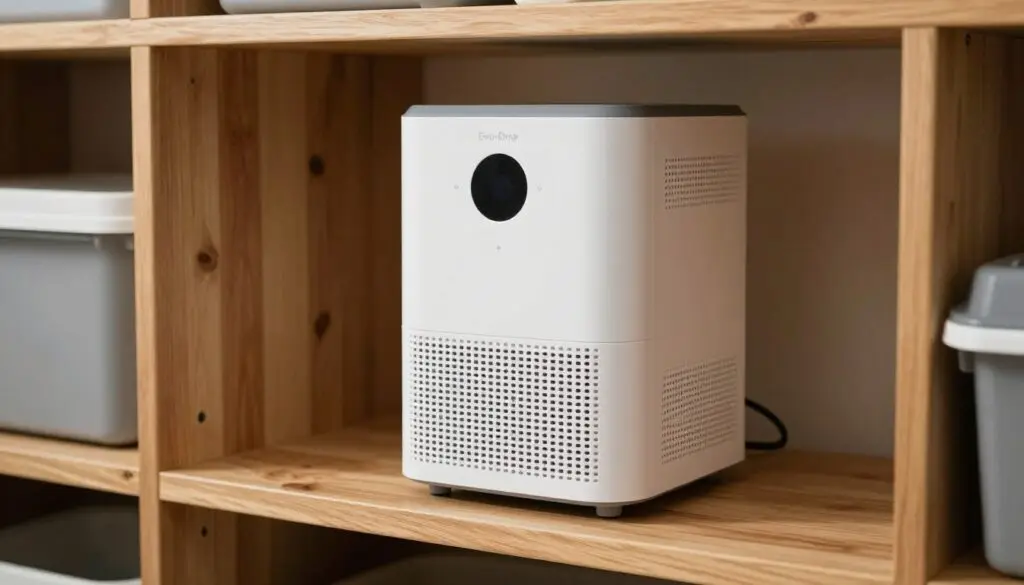
The Eva-Dry EDV-4000 stands out as a specialized tool for unheated environments where traditional models often fail. This ultra-compact desiccant dehumidifier solves moisture problems in small basement rooms and storage areas. It fits perfectly where full-size machines simply do not make sense.
At just 13 pounds, this model moves effortlessly between locations and stores easily when not in use. It represents the smallest effective dehumidifier worth purchasing for targeted humidity control. Anything more compact usually lacks the power to meaningfully impact damp conditions.
Overview
The Eva-Dry EDV-4000 uses desiccant technology to pull water from the air without a noisy compressor. This allows the unit to function reliably in temperatures approaching freezing. It is the ideal option for crawl spaces, garages, or even boats and RVs.
During operation, the device generates a noticeable amount of heat. This byproduct is highly beneficial in cold, unheated areas as it provides gentle warmth while drying the air. However, this same feature makes it less efficient for use in air-conditioned living spaces during the summer.
Because it removes under 15 pints daily, the condensate collection bucket is quite small. Users should take advantage of the continuous drain feature when positioning it near a floor outlet. This setup allows for “set it and forget it” moisture management in difficult locations.
Pros
- Near-Freezing Operation: Works in temperatures where refrigerant models freeze up.
- Whisper-Quiet: The lack of a compressor makes it extremely quiet for finished rooms.
- Ultra-Portable: Lightweight frame and small footprint make relocation a breeze.
Cons
- Frequent Emptying: The small water reservoir fills up quickly in very damp conditions.
- Heat Output: May slightly raise the temperature in the immediate area.
Key Features and Specifications
- Coverage: Effective for areas up to 444 square feet.
- Weight: Only 13 pounds for maximum portability.
- Dimensions: 18″H x 11″W x 7″D.
- Special Tech: Includes a built-in ionizer to help clean the environment.
Understanding Different Types of Basement Dehumidifiers
Finding the perfect tool to fight humidity starts with knowing how different machines actually work. Understanding these technologies helps you select units that actually perform for your specific needs. You won’t waste money on cheap hardware that simply cannot handle a damp basement environment.
Choosing the wrong technology can lead to more than just a wet floor. It can lead to higher electricity bills and persistent mold growth. There are three main types of technology found in the market today, but only two are truly effective for residential use.
Compressor (Refrigerant) Dehumidifiers
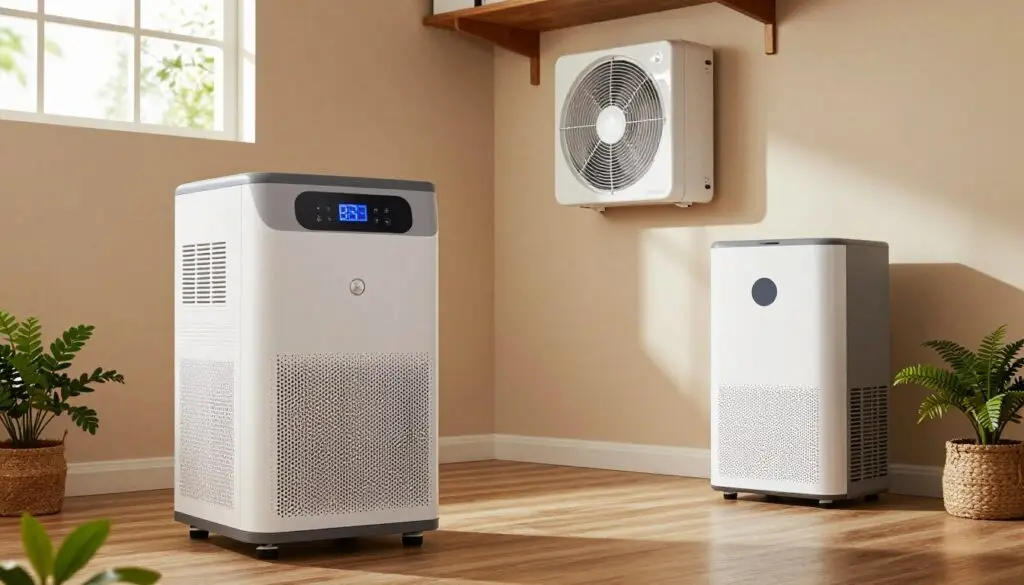
These dehumidifiers dominate the home market for a very good reason. They use an internal fan to draw air over a series of cold coils. During this operation, the temperature drop causes moisture to condense into liquid, which then drips into a tank or hose.
Refrigerant models excel at clearing moisture air quickly in rooms where the temperature stays above 65°F. They are the most efficient choice for high-humidity areas during the summer months. Most homeowners will find that this technology provides the best balance of power and cost.
Desiccant Dehumidifiers
These models use a special chemical material on a rotating drum to trap water from the air. They do not use cold coils, so they do not freeze up when the temperature drops. This makes a desiccant dehumidifier a great choice for unheated spaces or crawl spaces in the winter.
While they are quieter than other models, they do generate a small amount of heat. This can be a benefit in a cold room but might be a drawback in a warm, air-conditioned space. They provide steady control in smaller rooms but often lack the raw extraction capacity of large refrigerant models.
Thermoelectric (Peltier) Dehumidifiers to Avoid
You should actively avoid these “mini” dehumidifiers for any significant area. Our testing of the NineSky H2 showed it could not get the humidity below 63% even in small spaces. In contrast, a real dehumidifier like the Honeywell TP70WKN hit 49% with ease.
Peltier technology is far too weak to impact the large volume of a typical lower level. These small machines are often marketed at low price points, but they are essentially useless against serious water issues. Investing in proper equipment is the only way to ensure your home remains dry and safe.
| Technology Type | Ideal Temperature | Primary Benefit | Basement Suitability |
|---|---|---|---|
| Compressor dehumidifiers | Above 65°F | High moisture removal | Excellent |
| Desiccant dehumidifier | Below 65°F | Works in cold climates | Good for winter |
| Peltier dehumidifier | Warm Rooms | Quiet and small | Poor |
How to Choose the Right Size Dehumidifier for Your Basement
Selecting the ideal capacity ensures your basement stays dry without wasting energy. You should aim for a size that matches your square footage and humidity levels. Buying a unit that is too small leads to frustration and damp walls.
An oversized model often costs more upfront and increases your electric bill unnecessarily. However, it is always better to buy a slightly larger size than you think you need. This allows the unit to reach target humidity faster and run less frequently.
| Category | Basement Coverage | Pints Per Day | Estimated Cost |
|---|---|---|---|
| Small Capacity | Utility Closets | 15–30 | Under $150 |
| Medium Capacity | Up to 800 sq. ft. | 30–50 | $150–$250 |
| Large Capacity | 1,200+ sq. ft. | 50–70 | $250–$350 |
Most manufacturers scale their units in 10-pint increments. This makes it easy to find a dehumidifier that fits your specific room or storage space. Always check the manufacturer specifications before buying.
Small Capacity Models (15-30 Pints Per Day)
Small capacity models collect 15-30 pints each day and are suited for small areas or closets. These units typically cost under $150 and provide supplementary moisture control. We recommend you do not go smaller than the Ivation 13-Pint, as tiny gadgets often fail in a damp room.
Medium Capacity Models (30-50 Pints Per Day)
Medium units remove 30-50 pints every day and work well in medium spaces. They handle areas up to 800 square feet effectively. These models provide the best value for suburban homes and offer a balanced space-saving design.
Large Capacity Models (50-70 Pints Per Day)
Large capacity models remove up to 70 pints per day and are the best choice for mold prevention. If you have a very large basement around 1,200 square feet, you need this extra power. Stronger units are essential for environments with active water leaks or constant high humidity.
- Avoid undersizing: A unit running constantly without reaching the target humidity level will waste electricity.
- 10-pint rule: Scale up in 10-pint increments for every 500 square feet of extra floor areas.
- Initial investment: Buying the right dehumidifier from day one saves money on future repairs.
Essential Features for Basement Dehumidifiers
Beyond just pulling moisture from the air, the most effective units offer specialized functions for underground spaces. You should buy the largest dehumidifier you can reasonably manage. Otherwise, you might spend your entire day emptying the collection tank.
Large-capacity models can pull dozens of pints every day, and you need a system that handles that volume efficiently. Modern features make the difference between a machine that works for you and one that creates extra chores.
Drainage Options: Bucket vs. Continuous Drain
All models include a collection tank, but a drain with a hose attachment is a game-changer. Water weighs about 8 pounds per gallon, so a full bucket is often too heavy for most people to carry. Using a gravity hose lets the water flow directly into a floor drain for a “set and forget” setup.
This method prevents the machine from shutting off when the tank is full. If your basement lacks a nearby floor outlet, some units use an internal pump to move moisture. Attaching a hose to an active pump allows you to push water upward into a sink or window.
Energy Star Certification and Efficiency
Look for features like Energy Star certification to save up to 30% on utility costs. Many brands claim high efficiency but skip official testing. Always check official government websites to confirm their status before making a purchase. High-efficiency features keep your electric bill low while protecting your home from mold.
Smart Controls and Connectivity
Modern units often include a mobile app for remote monitoring. You can set a specific humidity level between 30% and 60% directly from your phone. This app connectivity means you do not have to walk downstairs every time you want to check the air quality.
Digital displays also show the real-time humidity level for extra transparency. These features provide strong control over your environment without the guesswork of manual knobs.
Auto-Defrost for Cold Basements
If your basement stays below 65°F, auto-defrost is one of the most critical features to have. It stops ice from forming on the cooling coils, which would otherwise halt the dehumidifier entirely. These specialized components ensure your machine runs safely and effectively all year round.
| Essential Feature | Main Benefit | Ideal For |
|---|---|---|
| Gravity Drain | Continuous operation | Homes with floor drains |
| Auto-Defrost | Prevents ice buildup | Cold, unfinished spaces |
| Energy Star | Lower electric costs | 24/7 dehumidifier use |
What to Avoid When Buying a Basement Dehumidifier
Before you swipe your credit card, let’s look at common pitfalls that can leave you with a broken machine. Choosing a machine to keep your air dry is about more than just the lowest price tag. You want a reliable product that lasts through damp seasons without failing unexpectedly.
Skip Dehumidifiers With Internal Pumps
While an internal pump seems like a great convenience, they are often the most common failure point. In our extensive testing, the internal components of both hOmeLabs and Moiswell models failed within just two months of daily use. These breakdowns turn expensive machines into useless hardware that requires costly repairs.
Gravity drainage is much safer and more durable over time. Stick to simple hose connections to keep your basement dry without worrying about a broken motorized part. Engineering like the elevated bucket on the Midea Cube proves that simple designs often work best.
Avoid Mini and Peltier Dehumidifiers
You might see small dehumidifiers like the Pro Breeze Mini sold for very low prices on Amazon. This type of device is far too underpowered to handle a real moisture problem in a large room. These units are often just cute gadgets that consume electricity without providing results.
These small units cannot lower the humidity effectively when compared to compressor-based units. Spending money on these “mini” options is usually a waste of your hard-earned cash. It is better to invest in a real solution that can actually protect your home from mold.
Beware of Unknown Brands and Recalls
Huge recalls have hit the market recently, affecting millions of dehumidifiers due to fire and burn hazards. In 2021, New Widetech recalled 2 million units, while Gree recalled another 1.56 million in 2023. These recalls included units sold under names like Honeywell, Danby, and Frigidaire.
Stick with trusted brands like Midea or Honeywell that offer accessible customer support and honored warranties. Many unknown brands care more about quick profits than building a lasting reputation. Buying an unknown product often leaves you stranded if it fails after a few months of operation.
| What to Avoid | The Main Risk | Recommended Alternative |
|---|---|---|
| Internal Pumps | High failure rates | Gravity drainage (Hose) |
| Mini/Peltier Units | Low water removal | Compressor models |
| Unknown Amazon Brands | No warranty support | Established manufacturers |
Since a dehumidifier is more likely to need support than other appliances, focus on long-term value. Always check for recent recall news before making your final decision. Reliable parts and active customer service are essential for any machine running 24/7 in your home.
Conclusion
Selecting a dehumidifier for your home should focus on real-world efficiency rather than just flashy marketing labels. Finding the perfect product is simple once you realize most brands offer very similar technology. In fact, most devices are manufactured in just three major factories across the globe.
To get the best results, look for options that carry the Energy Star Certified label. Choosing an efficient model ensures your electricity bills stay low while the unit runs every day. While many brands are identical, the Midea Cube features a unique design that stands out from the rest.
Managing basement moisture is the best way to protect your property from long-term damage. Maintaining an ideal humidity level prevents mold and keeps your air feeling fresh. A reliable unit with a powerful fan will ensure your air quality never starts to sink into unhealthy levels.
Investing in effective water removal now helps you avoid expensive repairs later. Taking action today ensures your living space remains healthy and comfortable for years to come. Prevention is always easier than fixing mold damage after it has already started to spread throughout your walls.
| Decision Factor | Why It Matters |
|---|---|
| Energy Star Rating | Reduces operating costs for your dehumidifier. |
| Factory Standards | Most brands offer similar options and internal parts. |
| Target Humidity | Keeping levels between 30-50% stops mold growth. |
| Midea Cube | The only major innovation in current unit designs. |